
History and Klout Measure Your Influence Differently

Klout, measure  your social media influence with complex algorithms based on your virtual reach. The algorithms take into account things like the Likes you get on Facebook and the number of Retweets you get on Twitter. Bloggers and authors have figured that a simple recipe of 3, 5, 7 or 10 steps, secrets, or actions to instant success, increase the number of readers you attract and the extent of your virtual reach. History however, will not measure our influence by the number of Twitter followers we have and the retweets we get. History will more likely measure our influence by the extent to which we changed people’s thinking. With their changed thinking people in turn, act differently towards others and can change the lives of many.

Slightly changing the paradigm of one influential person means more to me than being retweeted by well-meaning followers who liked, but will not follow my 3-step recipe to happiness. Recipes tell people what to do, but seldom change the way people think. Thought-pieces show people new ways to think about things and, in turn, sets up a chain reaction of influence much more than 10,000 followers who retweet our 3 steps to greatness.  I bet the research advocating the #-step recipe template as a way to get read, takes no account of the real-life influence of our readers. For real impact, let’s rather influence the real experiences of people than tally our social-media followers and the number of times they retweet us.

Dr. Bob Smith and Bill Wilson, founders of Alcoholics Anonymous’ 12-step plan started the style of enumerated steps to success in the 1930s. Dr. Stephen Covey popularized the style in 1989 with his  The 7 Habits of Highly Effective People. In fact it was probably God who first created this template with His Ten Commandments. Research claims that this template, over-used ad nauseam in the last few years, assures maximum readership and viral distribution. I question the value of its indiscriminate use.

Firstly, as many of us are writing on leadership one assumes that our audience is made up primarily of leaders. Now think about it: Are leaders really likely to read my 3, 5, 7 or 10 trite steps to success, and say, “Yes! I’ll start doing that immediately”? If they do, are they leaders or followers? How authentic are leaders who, after every time they read someone else’s recipe for success, adopt it into their own styles? Shouldn’t leaders have their own formulas and habits for success? By writing in this very predictable #-step recipe template, we build followings of followers, not of leaders.

Secondly, if achieving success, wealth, happiness, effectiveness or greatness could be reduced to a few steps, would so many people still be struggling to achieve these aspirations? So why fool the public into believing it is as simple as a few easy steps when it isn’t really?

Thirdly, I have read a few good blog posts today. Each of them had a list of 3, 5, 7 or 10 steps, secrets, or actions to assure my success. In total I was given well over 100 crucial steps. They all made good sense when I read them but I don’t remember any of them now. In fact I saw two lists of 10 essential things to do each morning – that’s twenty different actions altogether. I added up the time it would take me to do them: six hours each day and none of them directly affected my work! This is not to say that we cannot learn a fortune from tips from successful people – but give me one tip at a time so that I can absorb it, integrate it into my life-routine, and only then give me another tip.

Rather than give me a few success secrets that work for you and possibly others, give me a piece of stimulating writing that encourages me to see things from a different perspective or to consider an idea I have never before thought of. From my changed perspective I will design different actions myself; actions that are authentic to me and to my lifestyle and values, and I will make changes. I try to retweet posts with original content and artistic construction because to me they are of so much more lasting value than instant recipes for success.

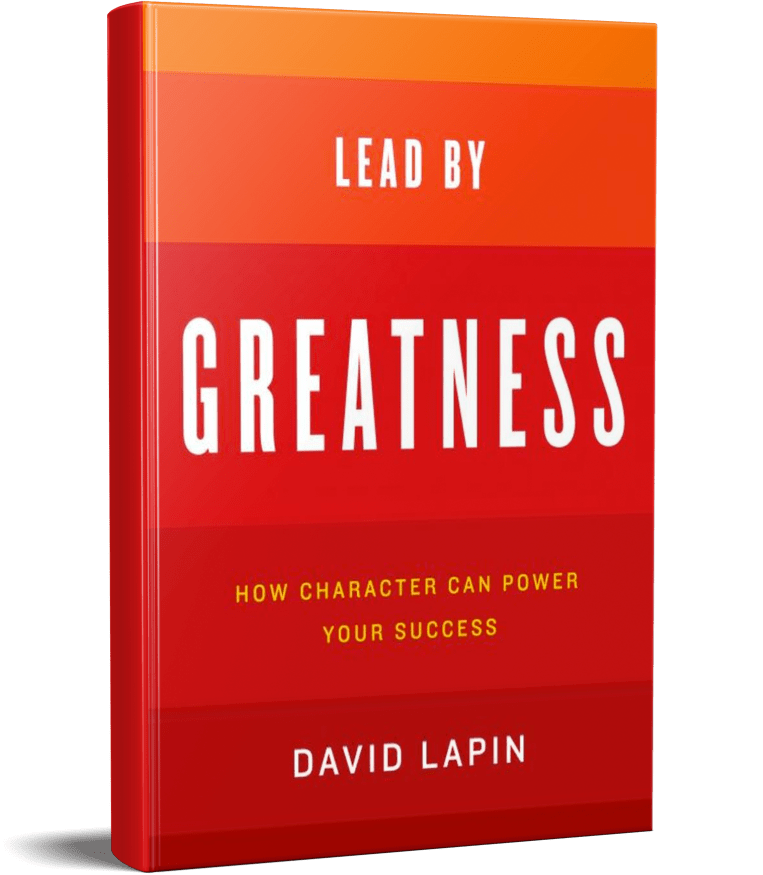
Lead By Greatness (now available on Amazon) will disappoint seekers of instant recipes for greatness. I do promise you though that the book will take you on a journey to new vistas of your life, your work and of your own greatness that you will never have seen before.  Lead By Greatness is written for people who lead and influence, not for those seeking a short-list of new actions and attitudes that will make them feel great. I admire, love and follow the many authors and bloggers who defy the recipe-book trend and rather than give me an instant To Do List, stimulate and expand my  thinking in a sustainable way. Because, as Oliver Wendall Holmes said, “Once the mind has been stretched by a new idea, it will never again return to its original size.”

If, however, you do want three steps to writing blogs worthy of followers who are themselves leaders, rather than tell me what others have done;

  1. ENGAGE me with your own authentic STORIES
  2. PERSUADE me with your own clarity and LOGIC
  3. INSPIRE me with your own PASSION.

A neat set of actions might get you retweeted. But a new idea can change the course of history.

Do What Others Can’t Do – Not What Others Don’t Do

If Barnes and Noble wants to avoid going the way of Kodak it needs to:

 …take the products and services if offers and leverage them in a way that no one else in the category is doing, or can do.

This is the suggestion of branding guru and Forbes contributor, Allen Adamson in How Barnes and Noble Can Save Itself From Becoming a Kodak Moment.

Can do are the key words. Offering your customers something that no one else can is the great strategic opportunity and challenge that faces every competitive business. Few manage to meet the challenge and exploit the opportunity. Failure to offer customers what no one else can nudges companies over the edge of differentiation into the abyss of commoditization. In this descending death spiral these companies compete on price which benefits customers but only in the short term. The talent in these cost-driven companies fighting for their survival strains under the effort of doing more with less as managers wring every cent of efficiency out of their systems. Shareholders lose value and ultimately their industry is disrupted by new technology or someone else somewhere else offers what they do cheaper and better. Finis!

But how realistic is it really to offer your customers something that no one else can?

Getting this right is core to the  Lead By Greatness strategic thinking. I have been introducing to my clients in multiple industries and countries to this thinking and method. Their growth and return has been unrivaled – and here’s why:

You can do things for your clients that are so specific to who you are that no one else can imitate them while still being experienced as authentic. However, you can’t identify these unique offerings with the conventional method of  studying your customers’ needs and scanning your competitive landscape. Whatever conclusions you reach using the conventional approach will lead you to the same conclusions that your competitors will have reached. Competitive divergence results and sooner or later you will again find yourself competing on price.

The secret to unassailable competitive advantage lies in your ability to find your unique offerings from deep within your own soul and the soul of your company or team not from your customers or competitors. (I don’t use the word soul in its metaphysical sense, but as that intangible quality that each individual and group of people have that differentiates their character, personality, tastes and values from others – much more about this in Lead By Greatness on Amazon next week!) With the current speed of information diffusion, nothing we do in design, process or structure remains unique for long. What truly differentiates people is not their physical characteristics but something deeper: their values, personalities – their souls.

We know that one artist, poet or author cannot replicate the work of another in a way that carries with it the power of authenticity that the original possessed. Well, the same applies to business: Your products and services – in fact your entire business is a work of art if it expresses something deep within you and deep within the members of your leadership team. When you match the expression of your own soul with the deep needs of customers, you have an unassailable advantage because no one else is like you; no one else shares your soul.

The problem is that this is not how most business leaders have been taught to build their differentiation strategies. In Lead By Greatness I outline the methodology that I have applied successfully to my clients’ businesses. There are many business leaders who have figured it out for themselves or who have done it intuitively.  What Google does is an expression of the very souls of Brin and Page; what Southwest set out to do was core to who Herb Kelleher is; and what Apple does is core to who Steve Jobs was. None of these founders built their models from customer focus groups or competitive analysis. They redefined their industries with products that customers and competitors could not have imagined at the time. They did not build strategy on data, they built strategy on who they were and what they believed, and then they brilliantly operationalized it. Each of their companies – Google, Southwest and Apple – have soul. Each of them has a differentiation factor that no one else has been able to copy. (In earlier blogs I have dealt with whether these unique differentiation strategies can outlive their creators.) If RIM would have stayed faithful to its soul and continued to design product authentic to who they are, rather than try to play catch-up with inherently different products and businesses, it might be in better shape today.

So can Barnes and Nobles avoid the fate of Borders? Absolutely they can. To do so though it is not sufficient to “make a better mousetrap” as Allen suggests. They will need to probe deep into the soul of their organization, identify and articulate the unique DNA that makes them different from anyone else who ever has or ever will sell books, and then build a strategy from the inside out. Fortunately for them, there is a tried and tested methodology for this process, and the track record of its success makes it a no-brainer.


Nice guys finish last?


Donald Trump being interviewed by Sean Hannity last week, said of a leading political figure: “he is just not a nice person.”  Trump continued to talk of his expertise in judging people and knowing when someone is nice or isn’t. (He did not comment on where he himself fits on the spectrum of niceness.) So I started to reflect on what we mean when we say someone is  nice or isn’t, and whether niceness is a factor in leadership. A few days after Trump’s comment I came across  Professor Art Markman’s thought-provoking Hufpost article, The Upside and Downside of Being Nice at Work, followed by a great Twitter conversation with him, @abmarkman, about it.

In the article about how being nice affects your work life, Art sites a paper:

….by Timothy Judge, Beth Livingston and Charlice Hurst in the February 2012 issue of the Journal of Personality and Social Psychology. In a series of studies, they were interested in three questions. First, does being nice affect your success at work? Second, does being nice affect your happiness at work? Third, do the effects of being nice differ for men and women?

Equating niceness with agreeableness, the study found that:

….men who were high in the trait of agreeableness made substantially less money than men who were low in agreeableness. In some studies, this difference was as much as $10,000 per year. In contrast, women were much less affected by agreeableness.

On the other hand Professor Markman notes the trade-off:

Overall, people high in agreeableness were happier at work than those who were low in agreeableness. So, there is a tradeoff. The factors that may lead you to make more money may also make you less happy.

I was troubled by the findings of Judge, Livingston and Hurst. Do you have to be nasty to move up the American corporate ladder? Are nice people really penalized in American business? It just didn’t align with my own research of effective leaders for Lead By Greatness, nor with my experience of some exceptional leaders of large corporations with whom I have worked. Think of people who have inspired you and changed your life, how many of them would you consider as not nice people? In putting these concerns to Professor Markman on Twitter, he commented, correctly, that “It is hard to be critical and nice at the same time. Being critical means telling people things they don’t want to hear.”

After reflection, the issue seems to revolve around what we mean when we describe people as nice.  Art and the study defined nice as agreeable and I think that is what many people think, certainly in American culture, when they use the word nice to describe someone. Herein lies the leadership challenge: If you consider nice to mean agreeable, then Art is absolutely right; it is hard to be agreeable and critical at the same time, it is hard to have hard conversations with others if you strive to be agreeable. Being agreeable means that it is important to you that others agree with your views and with what you are saying. It might be so important that you modify, or at least sugar-coat what you say so as not to jar people, or that you keep your thoughts and feeling to yourself for fear of being considered disagreeable. This personality trait of agreeableness will inhibit your leadership effectiveness and maybe your effectiveness in other meaningful relationships as well. There is another way to define nice, though.

Why can a caring parent, partner or friend  criticize us without compromising our opinions of them as being nice? The reason is that when we trust the person criticizing us we accept their criticism even if it hurts. When you criticize someone who trusts you will not damage their relationship with you nor will your criticism cause them to downgrade you  to being not nice (at least not for more than a few minutes). To criticize someone effectively they need to trust that you genuinely care about them and that your criticism is motivated by your love for them and not by your own egoistic insecurities.

Effective hard conversations and constructive criticism then rest on a premise of love (yes, nowadays it’s OK to use the L-word even in  business), trust and authentic caring for people. If to you,  being nice means being agreeable, then your progress in the business world will be hampered and your leadership effectiveness will be impaired. On the other hand if you are disagreeable, then your influence will depend only on your status and the power you wield. Disagreeable people are bullies not leaders.

However, if being nice means that you are trusted as someone who authentically loves others and cares about their wellbeing, you can challenge people, push their boundaries and criticize their negative actions and attitudes without  diminishing your leadership effectiveness. The highly successful leaders I mentioned earlier are super-nice people who make no effort to distort or compromise their opinions in order to appear agreeable. They can be direct and harsh, but they are so secure in themselves as human beings that the caring they radiate makes you trust their intentions even when their words are harsh.

Here are three checks to improve the effectiveness of your hard conversations:

  • Check if your deeper motivation is to make them feel small or to help them rectify a deficiency that, in addition to harming others,  is also not serving them. Merely being mindful of this question before you criticize, will uplift the tone of your communication and enhance its impact.
  • Check how much of your day and week is dedicated to self-development and to activities that build your own human stature.
  • Check that the leadership development programs that you provide to leaders in your organization build bigger people, nicer (not more agreeable) people, and teaches them how to bring their own authenticity, humility and caring to their leadership responsibilities.

Leadership is not just about about competence; leadership is also about character. This is why  nice guys (as we have defined them) finish first, not last.


The Music in Your Voice

How to Communicate Artfully

We are accustomed to associating sound with noise and music, but speech also has a quality of sound to it. Often we fail to use this quality of sound when we communicate and when we interpret the communications of others.

Think about it: How important is the sound of a person’s voice to you when you meet or speak to them for the first time? What part does the sound of their voice play in your decision to trust them, to connect with them or distance yourself from them? Does the sound of a person’s voice tell you anything about their sincerity and integrity, their arrogance or humility? For most people tone of voice plays a significant part in the attitude they adopt to another and to what he or she is saying.

Effective communication comprises three dimensions:

  • Content
  • Context
  • Sound

Content: When you formulate a message or interpret someone else’s you want to be mindful of the message’s purpose, the clarity of its wording, and the degree to which it inspires the intended action or response.

Context:  The context of a message takes into account who the message is intended for, the medium of communication (phone, email, letter etc.) and the environment in which it is being crafted and will be read. Where possible context will include other considerations such as people’s cultures, ages, values, social and positional status and education.

The sound of  a communication is its most powerful, personal and intimate dimension. Sound is absent in digital communication and even on the phone it is often hard to utilize effectively. This is why emails and other forms of non-tonal communication can so easily lead to misunderstanding. Sound includes quality and tone of voice, intonation, and body language. Even when you are speaking on the phone or writing an email, your body language can introduce tone into your message and add to or detract from its effectiveness and impact. Standing while you speak on the phone, for example, can add authority to your tone, folded arms can add a subtle undertone of defensiveness and if you smile while you write a message or speak on the phone the receiver is likely to detect a quality of empathy and friendliness in your tone.

As important as sound and tone of voice are when we encounter people for the first time, we sadly pay less attention to sound when we  communicate with people who are very familiar to us. When a man calls a woman for a first date he is likely to be attuned to the sound of her voice not just to her words. The same applies when we interview an individual for a job. But when our children, partners, bosses or employees talk to us we tend to focus more on what they say than on carefully hearing the sounds of their voices. We generally respond to their requests or statements without paying attention to the emotions that underlie their words. Their emotions reveals themselves more in the sound of their communication than in its content. People might choose words that cover up their real feelings which they might feel afraid to express openly, but the sound of their voices will usually give their true feelings away.

Artful communicators listen to sounds not only to content. They uncover the deeper feelings behind a communication and respond to these feelings rather than just to the words that may have been uttered in moments of anger, frustration, inhibition or excitement. Masterful communicators let the other person know that they have heard not only their words but also the feelings communicated by the sounds of their voices. This makes the speaker feel truly heard, recognized, respected and understood.

When you speak try to use your tone of voice and the sound of your words as tools with which to communicate your feelings. Try not to talk in monotones but introduce the music of the human heart into the way you talk irrespective of who  you are talking to. Give the other party the opportunity to understand what you are feeling not only what you are saying. This makes it easier for them to trust trust you and to respond to you in a deep way that goes beyond the superficial meaning of your words.

The words we use come from our minds, we can choose them for effect, for manipulation, for seduction or for deceit. The sound of each of our voices is unique to each of us, it comes from deep within our hearts and is truer to who we are and to what we feel. There is music in your voice, use it. Use it when you speak, use it when you love, use it when you pray, and listen to the music in the voices of others when they speak to you.

The Triumph of Today

THE STAGGERING COST OF PROCRASTINATION


The day I got my first monthly pay check ($600) my father urged me to open an investment account and put $100 of my salary into it every single month of my working life. I thought it was a good idea, a little conservative but good nonetheless, and I followed his advice…for a few years. Then I got distracted by the other things I needed and could buy with that $100 each month. I felt sure that as my salary grew the $100 would become increasingly trivial. I was wrong. My father assumed but didn’t explain to me the compounding power of consistency.

The human mind finds it hard to grasp the astonishing magnitude that results from the compounding effect of consistent behavior. It is easiest to see this result in financial investment, but its benefits are equal in the investment of any consistent human energy.

Consider the return on investing $1,000 a year at an average rate of 10% per annum for 10 years. Most people evaluate this opportunity as a “10% return opportunity,” and they do not give it focused and consistent energy. They lose interest easily and quickly get distracted. Some people however, grasp the compounding effect of consistent investment. They understand that their total investment of $10,000 will yield over $17,500 – a return of 75%. They see it as a 75% return opportunity and make sure to stay with the program until it delivers. The world is made up of those who get the compounding effect and those who do not. If you are among those who do not, do yourself a favor and download Darren Hardy’s gem of a book (free), The Compounding Effect – Multiplying Your Success One Simple Step at a Time.

The exponential benefit of compounding lets you turn small things into huge things because you are compounding what you have over and over again. If you folded a piece of paper in two, and then did that again and again, it would take only 42 foldings to create the thickness equivalent to the distance from the Earth to the Moon!

My intention in this article is not to promote sound financial investment practice; Darren does that more brilliantly than I could. I want to draw two powerful lessons from the idea of the compounding effect.

Firstly, any investment you consistently make, compounds on itself over and over again. Investing something into your children every day, your spouse or partner, your employees or customers, will yield a compounded return over time. This is because the impact of your action does not stop with the action itself. A human action almost always sets up a human chain-reaction. The person or people in whom you invest even small gestures of upliftment, enlightenment or enthusiasm, infuse some of that investment into other people they touch The impact of your initial action carries forward with ever increasing momentum and wider reach.

In Lead By Greatness I describe how, soon after the start of my career, a towering spiritual leader said to me: “You think of your interactions with others like a chemical reaction, changing one molecule at a time. But humans don’t function that way. We are not mechanical, and your connections do not follow the laws of mechanical physics and chemistry. You are a spiritual being, and every time you meet someone a nuclear reaction occurs, not a chemical one. A nuclear chain reaction can release several million times more energy than a chemical reaction. Each person on whom you have some impact can in turn affect the lives of countless others. The effect is exponential.”

Some thirty years after this conversation, the British Medical Journal published the results of a twenty-year study by Harvard social scientist, Dr. Nicholas Christakis, and his political science colleague, James Fowler, at the University of California, San Diego. The study showed that emotions can pass among a network of people up to three degrees of separation away. As Time magazine commented, your own joy can affect “how cheerful your friends’ friends’ friends are, even if some of the people in this chain are total strangers to you.”[i] Think about the number of people you engage with in a week, and how many people each of them mix with, and how many people there are in that network three degrees of separation from you. The number could be well into the millions!

Christakis and Fowler were not even talking about the effects of your actions on others; they were just talking about the way you feel. But consider how easily a small action can change the way another person feels: a smile, a pleasant comment, an affectionate touch. When other people feel in some way uplifted by your act of caring, they in turn are likely to act more caringly with the people they meet. This just amplifies the extent of the chain reaction you trigger each time you engage with someone, however briefly. This is the compounding effect of human relations.

The second lesson to draw from the compounding effect is that the investment that generates the highest value is the very first investment. In my example of the $1,000 invested annually for 10 years, the first $1,000 yields $2593 after 10 years of compounding at 10%, a return of nearly 160%!! The second year’s investment yields a lower return, and the last year’s investment only yields 10%. This gives you an idea of the opportunity cost of procrastination. By starting next year instead of this year or tomorrow instead of today, you lose the investment with the highest return: the investment of today in the future of tomorrow.

The Tyranny of Tomorrow should be seen through the prism of the Triumph of Today.


[i] Park, Alice. “The Happiness Effect,” Time. December 11, 2008.

The Tyranny of Tomorrow

It is already time to audit your New Year’s resolutions.  If you are human there is a good chance that by now you have disappointed yourself on some of what you promised yourself barely a week ago. Why does this happen year after year, week after week?

The culprit is that diabolical word we tend to insert into our resolutions: Tomorrow – “Starting from tomorrow”… “from tomorrow I will…” and so on. Using the word tomorrow leaves a time gap between the energy in the moment of inspired resolve and the time of its implementation. This time gap dissipates the energy of resolve and cools it down.

Resolve is an idea on which we feel inspired to act. Inspiration is energy and should be measured in degrees like heat is measured. Not “how inspired or motivated am I?” but rather “how hot am I about this idea?” We are at our hottest when we are first inspired. From the moment of inspiration onward we cool down, until our idea, though still crystal clear in our minds, has lost its energy.

When we act on an inspired, hot idea, the inspiration converts from energy into tangible action creating a pathway in our psychological operating system. This pathway makes the action  easier to repeat a second and a third time even if our inspiration cools down. Action converts an idea into an experience. When we act we immediately feel benefit from our action helping us drive forward even when we no longer feel as inspired by our initial resolve. By maintaining the activity regularly for 30 days, the action gets more deeply wired into our operating systems and becomes second nature, something we do on autopilot with much less resistance from the tyrannical forces of lethargy and inertia.

In Your Problem Isn’t Motivation, Peter Bregman explains the difference between lack of motivation and lack of follow through and suggests that once you are motivated you should stop thinking about it. The step from inspiration to action is not a step that needs the mind. The mind interferes with follow through and thinks of all the wonderful reasons why follow through at this time might not be the best idea! Successful follow through depends on “thoughtless” action rather than further analysis. In my terminology follow through needs heat, it needs energy; thought and analysis cool resolve.

Putting something on your ToDo list is not an action. ToDo lists are refrigerators of hot ideas. If the only tangible action you are able to take at the time of resolve is putting your idea onto your ToDo list, at least preserve something of your energy and passion in the way you word the task. Also take care to give it a measurable form and a dedicated time in your schedule for starting. Instead of “Register at the gym,” you might write: “To recapture the exhilaration of fitness, call xxx.xxx.xxxx to set up an appointment with a trainer”, and allocate the task to a time in your schedule, if possible later that same day.

Tomorrow is another word for never. If you are serious about your intention, avoid the word tomorrow and replace it with action, now. A small action that begins implementation translates an idea from a thought into an experience. Action, even a small action, provides a feeling of satisfaction that takes over from inspiration as the force that drives you forward.

  • Resolve is an idea with energy; the energy to implement it.
  • Resolve can quickly evaporate and then you are left with an idea that has no energy.
  • An idea without energy, is not resolve; it is a cold thought.
  • Once you are resolved, find a way to immediately translate your resolve into a tangible, measurable action.
  • Feel the satisfaction, even the pride, derived from your speed of execution and use that feeling to drive continuity.

Telescopes and Diversity

Last night we visited Kitt Peak in Arizona, a 7000 ft mountain top campus that houses the most diverse collection of astronomical observatories on Earth. Our instructor entertained, enraptured  and educated us with his knowledge and charisma. The visit left me thinking about many things, but most of all about how different the universe looks when you view it through a different lens. Not only does it look more beautiful, but the science of astronomy  has taught us that very little is in fact the way it appears to us.

Nicolaus Copernicus (1473-1543) began modern astronomy with his defining model of heliocentricity – a revolutionary view (at that time) that the sun is stationary and was at the center of the universe as it was then known. This view was not only contrary to all scientific, religious and philosophic opinion of the time, it was contrary to humankind’s own sensory experience of the sun’s passage through the skies each day and each year. Our experience told us at that time, that we were stationary and the sun was orbiting around us. Our sensory experience told us that the moon was a flat disk. A century later using telescopic lenses to look at the universe we discovered that things were different. The sun was in fact stationary, it is we who are in orbit, and the moon is a mountainous sphere.

When we look at the people around us, particularly people we have not met before, are we experiencing with the “naked eye” or are we seeing them as they really are? Are our assumptions about people based on our subjective human experience of them (in which case we could be as off the mark as we were in our knowledge of the universe before the telescope), or have we checked our assumptions about people against data?  Do we have a sense of how the world looks to others and how they experience life? Are they using the same lenses that we are? And if we were to take a peek at the world through their lenses, would we be surprised at what we saw, or would the world look the same to us as it does when we experience it through our own lenses?

These are some of the questions that underpin my approach to diversity. The fact that no two people are exactly the same goes far beyond their physical characteristics, the color of their skin, hair and eyes, their fingerprints and DNA, their customs and their languages. The differences between people extend beyond the way people LOOK to the world to the way they SEE the world. Difference is more about how different people see and experience the world than it is about how the world sees them. We each have our own set of lenses through which we see the world and experience life. The same things and experiences look and feel different to each of us. As a consequence each will interpret things differently and react to them differently. Understanding these differences and how to communicate to diverse people in ways that convey consistent messages across cultures, is the cornerstone of Cultural Intelligence; the value created from arbitraging cultural difference for mutual economic advantage is its outcome.


Was 2011 Filled or Fulfilled? – A 5-Step Audit and Action Plan.

The holidays give one space to take a step back and reflect. This year I couldn’t help thinking about how terribly filled ones life can be without it necessarily being fulfilled. As with everything, vacuums get filled, but not deliberately, not with direction and purpose. So if you have empty space in your closet, it will get filled. If you have time in your schedule or capacity in your mind, they too will get filled. But with what? With what you value and treasure, or with whatever just can’t find another place to occupy? Just as you don’t need to adopt people as friends simply because they have no one better to hang out with, you don’t need to accept things in your closet, activities in your schedule or thoughts on your mind, just because they have nowhere else to go!

Is your life filled or fulfilled? Try this exercise:

  • Audit of any day or week of your life (preferably the most recent). Review your activities, accomplishments, thoughts, connections and conversations.
  • Next:
  1. Articulate what you believe the purpose of your life is, and what some of your most important values are. (Lead By Greatness provides quick and robust methodology for this.)
  2. List the people in your life in whom you most want to invest.
  3. List the activities that energize you. (These will often be the opposites of activities that drain you!)
  4. Write down the things you most wish to accomplish in 2012.
  5. Reflect on the most imaginative dreams for your future.
  • Now, check your audited list and rate each activity (say on a scale of 1-10) against each of the 5 items above. How aligned is each activity with items 1-5?

You should quickly get a sense of whether your life is filled or fulfilled, and where you might consider changes.

Enjoy the New Year and choose to live a fulfilled 2012.


Don’t lose the past!

Even moments passed can be recalled and revisited. Although in one sense there will never again in human history be a repetition of the present moment, in another way time is circular and repeats itself annually. Each year we experience spring, summer, fall and winter. Each year we have a Christmas or Chanukah and a New Year. Each year we celebrate a birthday, an anniversary. We can revisit time, we can recall moments; and by doing so we multiply the value we gain from the moments that make up our lives.

You know how you feel when you go to a place that you visited a long time ago? You are not the same person as you were then, and the world is not the same. Still, your presence in a place you visited a long time before helps you recapture memories and feelings that you felt then but may not have felt since. In just the same way as you revisit old places, you can also revisit precious, joyful moments that occurred a long time ago. Some of the mechanisms we use to revisit past time are anecdotes, reminiscences, photographs and journals. But we can also use time itself; anniversaries of joyous moments. Just as we celebrate religious and national events on the dates they occurred we can resuscitate personal moments of joy on their anniversaries too.

Digital calendars make this very easy to do. Each day enter a short, very descriptive piece in your calendar about a joyous or meaningful moment from your day. Set it for repetition every year. As the years go by many days in your calendar will have accumulated entries to remind you of wonderful moments you may have forgotten. Take a moment to reflect on them with gratitude and relive the joy and happiness you felt at the time. Doing this puts your present life into perspective and deepens your daily experience of life itself. Life is not a linear stretch of accumulated moments that once past never return. Life is a circular spiral of time, repeating each year. With each cyclical repetition your higher levels of experience, insight and wisdom enable you to experience past events with even greater depth than you did at the time. Enjoy the past… in the present. It made you who you are.

Spiral Staircase at The Vatican


Hang on to the 9-5 Work Day!

Buckets of value will be lost if the 9-5 workday becomes a thing of the past. Dan Schawbel argues in a piece he wrote in TIME today titled The Begining of the End of the 9-5 Work Day, that the conventional work day might in fact be relegated to the scrapheap of organizational evolution.

Leading the charge in the shift toward allowing employees to work anywhere around the world, at any time they want, are companies such as Ernst & Young, Aflac and MITRE, which all realize that they need to accommodate employees’ personal lives if they want to retain them. “This notion of an eight-hour day is rapidly disappearing, simply because we work so virtually and globally,” says Maryella Gockel, Ernst & Young’s flexibility-strategy leader. By understanding Gen Y-ers’ need for workplace flexibility, companies are better able to recruit and grow young talent for the future.

All of this is true and valid and aligns with my blog, Leading Net-Genners.  I argued  that the whole old employment model, not just the 9-5 workday, will become extinct. I suggested that instead of employing young people, progressive leaders create dynamic partnerships with them. However before succumbing to what seems like an inevitable trend, let’s weigh up the costs and explore alternatives. The trend I am suggesting we consider circumventing is not the trend of changing the employment model from an hierarchical one to a collaborative one. That is a positive trend and we should vigorously embrace it. The trend we should question is the demise of the 9-5 workday.

The 9-5 workday is about much more than inflexible office hours compelled by convention, structure and old-fashion managers. The 9-5 workday forces the intersection in time and place of multiple individuals. Each of these individuals come together at a given time and place and bring with them the power of their human energy, intellect, passion and talent. The reaction that occurs when this energy collides in the workplace can be nuclear in its scale, impact and innovation. I doubt we would have the innovation of a Google, Microsoft or Apple, if their employees all worked remotely at different times of the day. It is not only tech companies that desperately need to innovate; anyone who plans to be in business in five years time must cultivate a culture of rapid innovation. Disruptive innovation is unlikely to occur in a company made up of virtual workers.

The problem is not that Gen-Y employees refuse to work 9-5 and that we must adapt to their changing lifestyles in order to attract them. The problem is that we have not redesigned our 9-5 work experience in ways that entice young people to bring their bodies, minds and souls to the office and interact excitingly with their peers and mentors. We know how important it is to constantly redesign our product offerings for the changing needs of our customers, but few companies put the same effort into redesigning the work experience and customizing it to the changing needs of Gen-Y employees and team members. Allowing employees to connect to Facebook or to listen to music hardly constitutes the redesign of a work experience. On the contrary these freedoms encourage employees to “opt-out” of the collective work experience and the organizational community. By allowing this opting-out we  acknowledge our failure to provide employees with an experience more alluring than their two-dimensional digital friends and their canned music.

The work experience is not only important for the attraction and retention of young talent; a constantly evolving and innovative work experience also propels product innovation and customer experience. It helps to protect a company’s competitive advantage from erosion and commoditization.

Here are some steps to consider:

  • Set up a task team comprising both young Gen-Y employees and experienced leaders to conduct an audit of your existing work environment and the ways in which it has/has not changed over the past 3-5 years.
  • Brainstorm the kind of work experiences that would be most alluring to the talent you are trying to attract and retain. These could include:
    • work autonomy
    • a tolerance for responsible error
    • an inspiring sense of higher purpose
    • easy access to mentors and organizational leadership
    • openness to adopting radical  ideas if they make business sense
    • opportunities to challenge and be challenged in an emotionally safe environment
  • Check to what degree these experiences are currently present in your employees’ work lives
  • Explore what needs to be done to infuse these experiences into your organization
  • Be ready to challenge and if necessary overthrow some long-held orthodoxies to make way for the vital and the vibrant.

When you have redesigned your work environment create the expectation that everyone is at the workplace together for a certain minimum number of hours a day. 1+1  = much more than 2 when  aggregating human energy. The energy itself will entice your employees to take a break from Facebook and iTunes to interact in your vibrant and challenging environment.